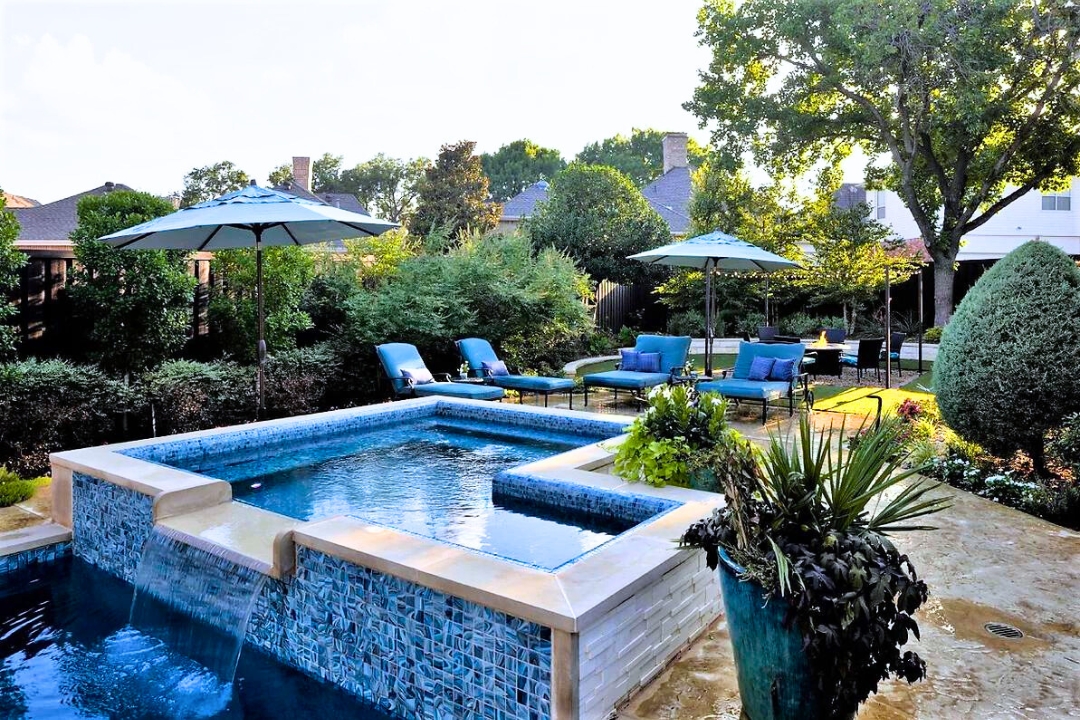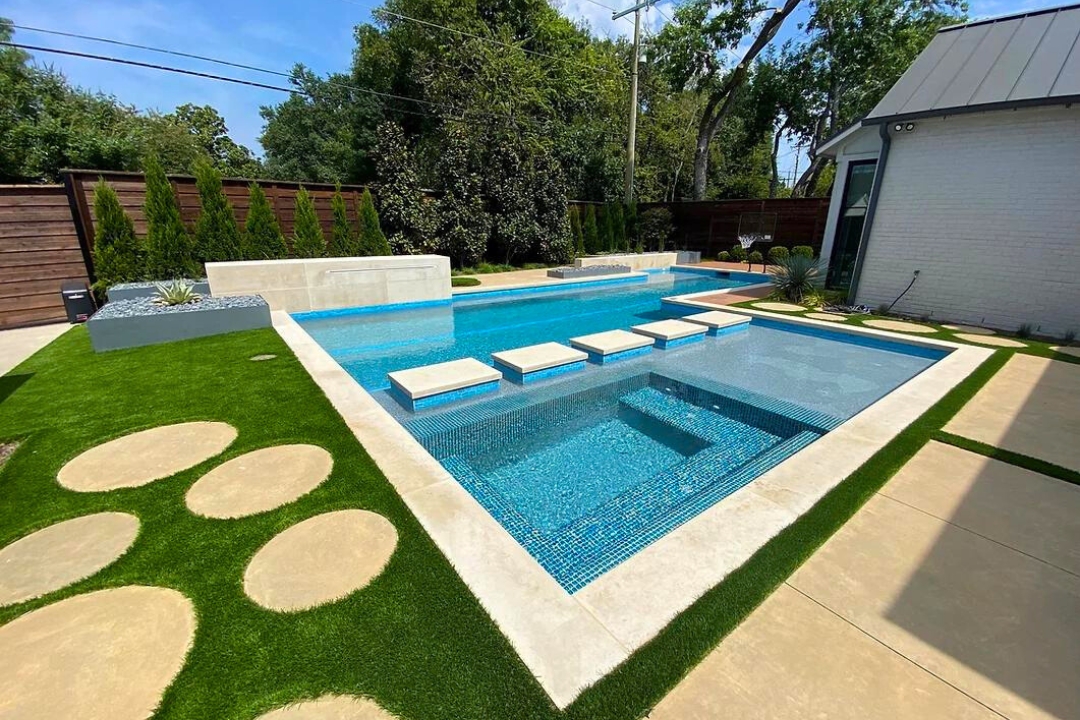
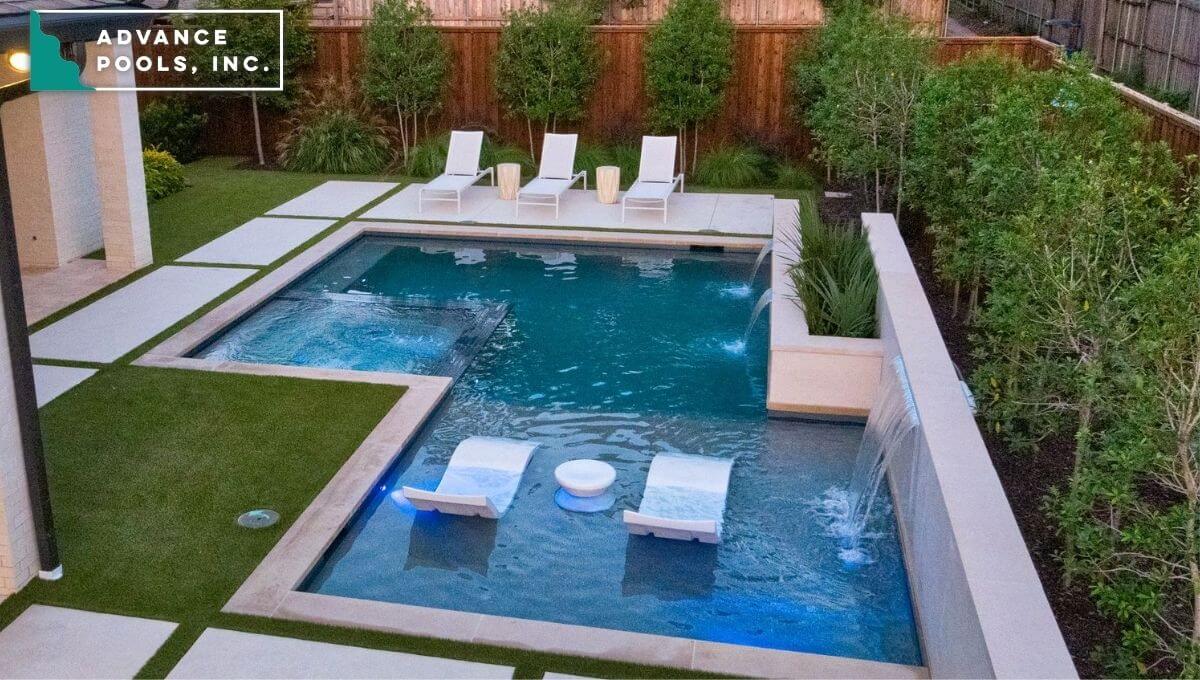
Many homeowners wonder how much does it cost to build a pool when planning a backyard upgrade. The total cost can vary widely depending on design choices, materials, site conditions, and labor. There is no single price that applies to every project, but understanding the main cost factors helps you build a realistic budget.
Our guide breaks down the major elements that influence pricing so you can plan with clarity and avoid unexpected expenses to build your dream pool.
Pool building materials are one of the most important factors in determining how much it costs to build a pool. The type of pool you choose will also have a major impact on both installation price and long-term maintenance.
Concrete pools are usually the most expensive option. They are fully custom-built, which means every design detail is created on-site. This flexibility increases labor time and material use, which raises the overall cost to build a pool.
Fiberglass pools are generally more affordable. They are pre-manufactured and delivered in one piece, which reduces installation time. This helps lower both labor and construction complexity.
Vinyl liner pools typically have the lowest upfront cost due to their durability and resistance to algae. However, the liner will need to be replaced every 10 years, which adds to long-term maintenance costs.
Are you ready to elevate your outdoor living experience with custom pool structures that inspire and delight?
The cost of labor is a major component of pool pricing. The pool construction process involves multiple skilled trades, including excavation crews, plumbers, electricians, and finishing specialists. Excavation prepares the ground, plumbing installs water circulation systems, and electrical work supports lighting, pumps, and heating systems. Finishing includes tiling, decking, and final safety checks.
More complex pool designs require more labor hours. A simple rectangular pool is faster and easier to install compared to a custom pool with curves, waterfalls, built-in seating, or integrated spas.
Local labor rates also influence pricing. In areas where construction demand is high, hourly rates may increase, which directly impacts how much costs to build a pool in your county.
When estimating how much it costs to build a pool, size and depth are often the biggest variables after material selection.
Larger pools require more materials, more excavation, and more labor. A small plunge pool is significantly less expensive than a large family-sized pool. As surface area increases, so does the amount of concrete, fiberglass, or liner material needed.
Depth also affects cost. Deeper pools require additional excavation work and stronger structural reinforcement. They also require more water, stronger pumps, and sometimes upgraded filtration systems.
Are you ready to elevate your outdoor living experience with custom pool structures that inspire and delight?
The condition of your property plays a major role in construction costs. Flat and open spaces are the easiest and least expensive to build on. However, if the yard has rocky soil, poor drainage, or a steep slope, additional engineering and excavation work may be required. This increases equipment use and labor time.
Limited access to your backyard can also raise costs. If machinery cannot easily reach the construction area, crews may need additional equipment or manual labor to clear up the building site.
Before construction begins, most homeowners must obtain permits from their local council or building authority. Permit fees vary based on location and project size. Inspections are usually required at different stages of construction. These inspections ensure that the pool meets safety and building standards.
While permits are a necessary part of the process, they also add to the overall budget. In some areas, compliance requirements such as fencing, drainage systems, or safety barriers can significantly increase total cost.
Planning these expenses early helps prevent delays and unexpected charges later in the project.
Homeowners should carefully decide which features they want for their pool based on their budget and long-term needs. While extra pool features can significantly increase both installation and maintenance costs, they improve your pool’s usability and appearance.
These include spa additions, lighting systems, waterfalls, tanning ledges, and custom pool decking. Safety features such as fencing, pool covers, and alarms are often required by law and should be included in early planning.
So, how much does it cost to build a pool? The answer depends on several key factors, including materials, labor, size, location, permits, and additional features.
Our swimming pool builders can help you understand the factors that affect pool costs, avoid unexpected expenses, and design a pool that fits your space and budget.
Request a free estimate from Advanced Pools and own a custom pool design that satisfies your every requirement.
 (972) 248-4360